Wednesday, April 17, 2013

Finding cheap flights fast

Having trouble finding cheap flights fast? Do not worry; we have some quick ideas to help you catch that flight without spending a fortune.

How to find cheap flights

(Photo by Swami Stream)

Be flexible on time and flight
One of the most effective ways of finding cheap flights fast is by being flexible with the time of your flight and the airline with which you intend to fly. Normally, flying at odd hours such as early in the morning or late in the afternoon is cheaper than prime time flights. Occasionally, even the airline you are booking your flight with matters. If the flight needs to take off, several seats are empty, and there are no takers for the seats then it is more likely than not that, you would be lucky to land on a cheap ticket to fill out the flight.

Check out online travel sites
Your travel deal could just be a click away. When you search online for cheap flights, you will find numerous travel sites offering tickets at very handsome discounts, especially for last minute flights. Most airlines offer such last minute deals if they have extra seats to fill and the date of departure is drawing close. Therefore, you should check out online travel sites and most, if not all, of the travel sites offer you provisions for signing up in order to get notifications when such deals are available.

Check out print ads
Buying air tickets that are on promotion can easily help you save hundreds of dollars. If you are wondering where to find such promotions, then you should take advantage of the tons of magazine and newspaper ads that you come across. In most cases, you will find a travel section dedicated mainly for travel agencies who advertise their promotional rates for a limited time. Alternatively, you can choose to confine yourself to the travel magazines that tend also to be good sources for finding cheap air tickets.

Therefore, finding cheap flights fast should be easy when you are flexible on the time of your flight and the airline with which you are flying. You can also find cheap flights by searching online and by checking out print ads from travel magazines as well as newspapers.

What Are Your Deal-Breakers?

2013-04-11-outdoormarketEcuador.jpg

Over the last 11 years of living throughout Latin America, we've missed lots of things we had back in the States. Just one example... roasted red peppers packed in olive oil. Eight brands in the supermarket back home... none in the first two countries we lived in.

There have been many more. Decent drill bits, boneless chicken breasts, punctuality, customer service, Triscuits...

But none of these things have been deal-breakers for us. We're lucky this way... we quickly learned to go with the flow and enjoy the novel and unusual things our new locations offered... AND to savor the challenge of replacing or working around the things we wanted but couldn't find.

That's why we make a habit of advising anyone considering a move abroad to do one simple thing -- ruthlessly assess yourself. Before you do anything else, be completely honest with yourself and think hard about the things you actually need to be happy. Ask yourself what you'd do if you couldn't find these things in your new home or had to come up with your own replacements for them.

To aid in this assessment, we came up with this little exercise.

Imagine that when you get up tomorrow morning, you will immediately board a plane and fly away to live permanently in a foreign country.

What is the one thing you would make sure to take with you if you could? In other words, what's the one thing you'd miss the most if you arrived without it and couldn't find the same thing in your new country?

Your 4G smart phone? Your non-stick cookware? Your 50-inch high-def TV? Your nicotine gum? Your hybrid SUV? Your memory foam pillow? Your favorite contact lens solution? Your "Swedish steel" woodworking tools? The English language?

The point is to identify your deal-breakers. It doesn't matter if it's ultra-pasteurized half and half for your coffee or a particular brand of denture cleanser or high-thread-count sheets or easy-scoop kitty litter.

If you don't have it and can't get it, and that makes you miserable... then it won't make much difference if you're swinging in a hammock on a pristine white-sand beach in a tropical paradise. You'll be unhappy.

And here is what all the successful expats Suzan and I have ever known have in common: They don't have any real deal-breakers because they stay flexible, they improvise and they keep things in perspective.

If they can't find good Ranch-style dressing, they make their own from scratch with ingredients they can find.

If unfamiliar local procedures or bureaucracy means they can't get all the chores on their daily to-do list done, they don't rant and rage... they make shorter lists.

If they can't grill an acceptable steak with the grass-fed beef from the local mercado, they grill chicken and fish and use the beef for chili and stew.

If they don't know enough Spanish or Portuguese or French to order a pizza over the phone, they learn it... or learn to enjoy making pizza at home.

Over the years we've met a few expats who never wanted to do that. They spent most of their time trying to make their lives in Mexico or Ecuador or Belize or Uruguay exactly the same as they were back home... and complained when they couldn't.

This is the biggest deal-breaker of all, of course, because the only place on earth exactly like back home is... back home.

That's why this exercise is helpful. It brings your expectations into focus... and clarifies the reasons you're considering a move abroad in the first place.

And if, after being honest about your own deal-breakers, you can say that you're still up for an adventure that will constantly challenge and endlessly entertain you with new ways of living, thinking, and seeing -- then the expat life just might be for you.

Boston's North End in Black and White

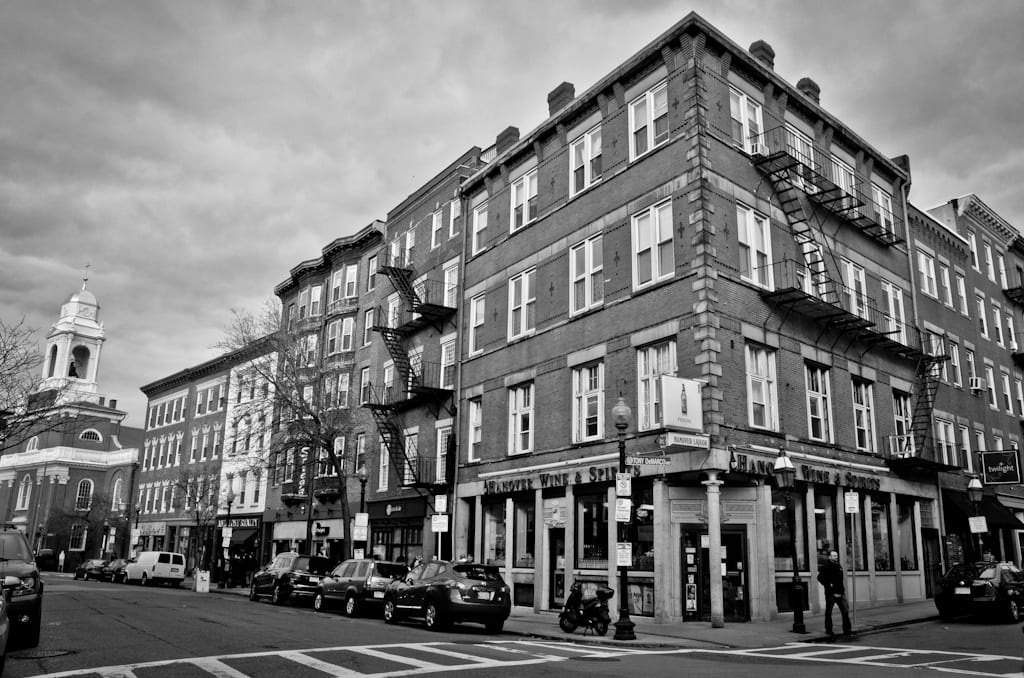
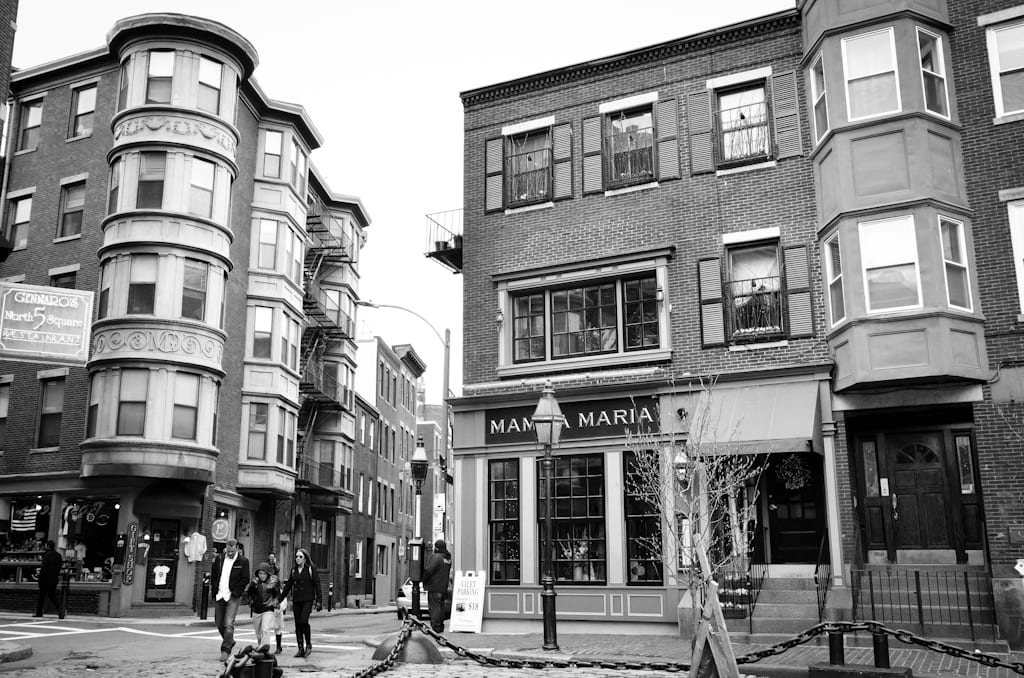
Hanover Street, North End

Big news: after years of filling this blog with my iPhone photos, I’ve upgraded to my first DSLR!  I am now the proud owner of a Nikon D5100 and a Tamron 17-50 lens, the latter a recommendation from my wonderful photographer friend Ed.

The camera body retails for $496.95 without the kit lens (I bought it used “like new” from Amazon for $439 with shipping), the lens for $499 (I bought it used “like new” from Amazon for $400.49 with shipping).

Also bought: UV filter ($12.68), polarizer filter ($8.05), camera cleaning kit ($9.99) and a 32 GB memory card ($23.98).

Manual Shooting


Mario is a champion of shooting in manual, and has insisted from the beginning that I only shoot in manual, figuring out the cryptic combinations of aperture, shutter speed, and ISO to deliver the best exposure possible.  Mario would flip out if he saw me clandestinely shift the camera into auto!

It’s a bit frustrating, especially after being so used to shooting everything on my iPhone, but I’m getting better at it.  And the camera and the lens really are wonderful.  Here are some pictures that I took in the North End yesterday.

North End

The North End


Most people who visit Boston say that the North End is their favorite neighborhood.  It’s one of the oldest neighborhoods in Boston and while it was prime real estate around the time of the American Revolution, it went into decline and became host to various ethnic minorities — the free blacks, the Irish around the time of the famine, the Portuguese, Eastern European Jews.  In the mid-19th century, the Italians came — and they’ve never left.

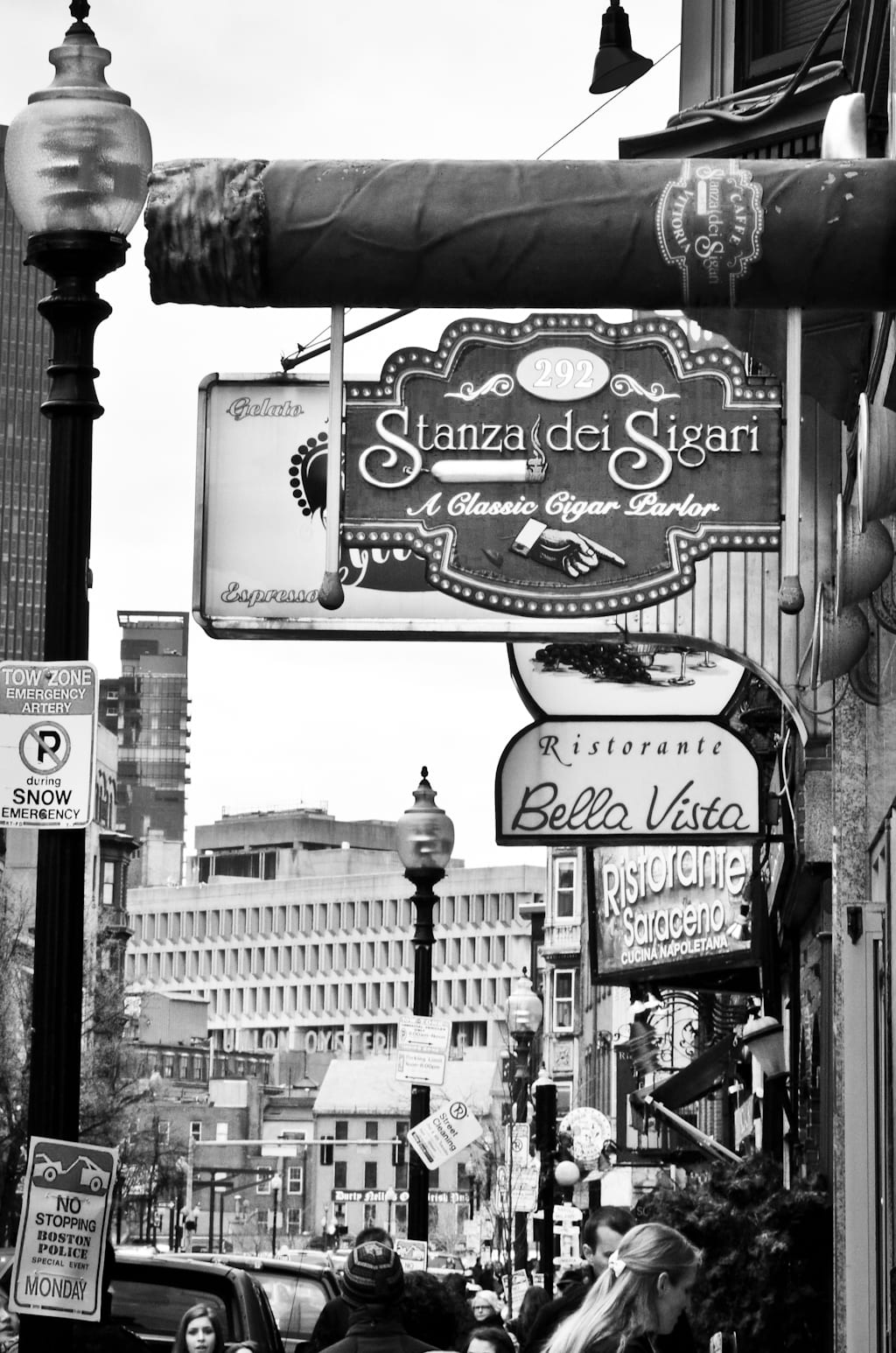
North End Signs

The North End today is fantastically picturesque and still home to many Italians.  Will that always be the case?  I doubt it.  The North End is relatively cheap compared to other downtown neighborhoods (in part because the apartments are so tiny), so it’s becoming increasingly yuppified with fancy boutiques and yoga studios.

But for now, the North End is a wonderfully Italian place.  Hanover Street is the main drag and it’s filled with more Italian restaurants and cafes than you can count.

Signs in the North End

It always surprises me that Boston is so strict about nightlife — you can’t get alcohol anywhere after 2 AM, the T shuts down at 12:30 AM, and happy hour is actually prohibited — yet cigar lounges abound.  The North End is home to a few of them, complete with giant cigar signs.

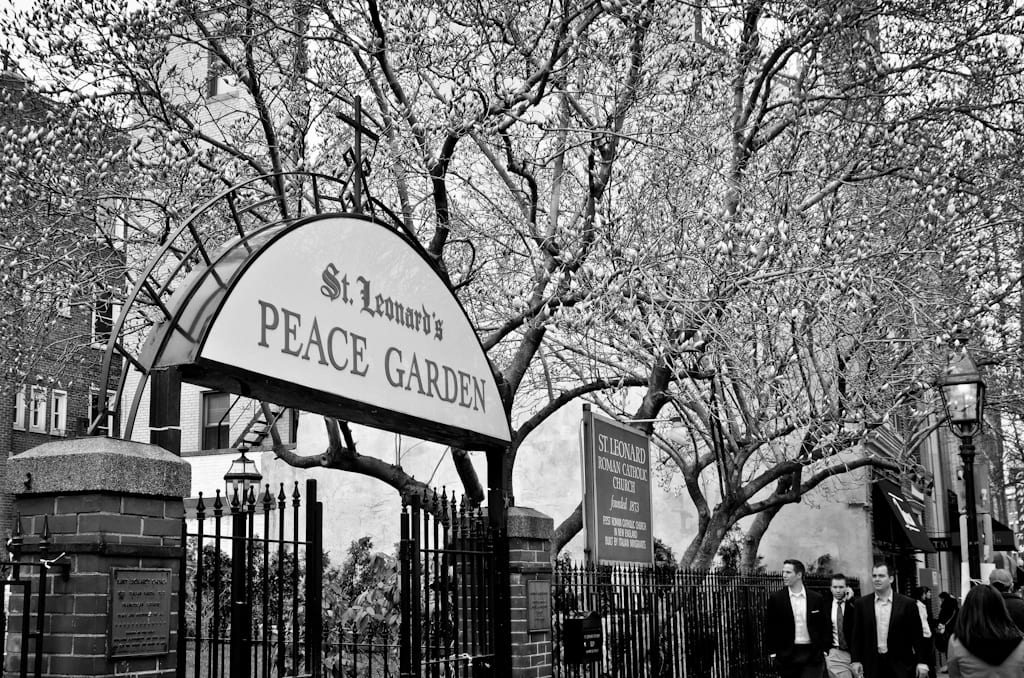
Peace Garden

We timed our visit a little early this year — the Boston area has had a long, late winter, so very few trees are blooming, even though it’s mid-April.  This one, on top of St. Leonard’s Peace Garden, was a glorious exception!

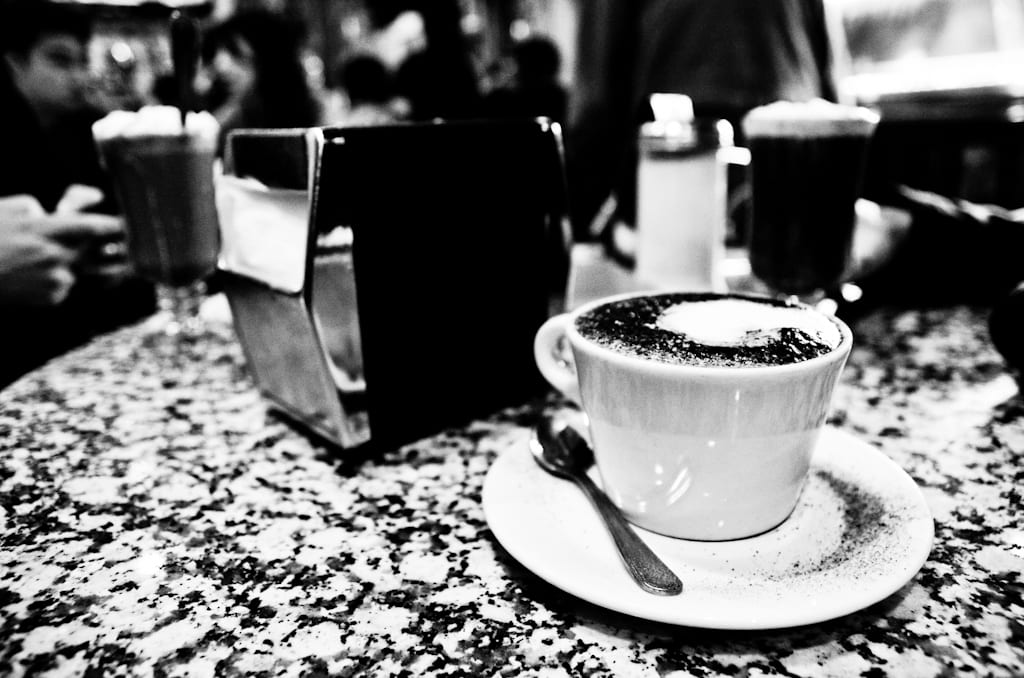
Cafe Vittoria

Best place to sit and grab a drink or dessert?  Caffe Vittoria on Hanover Street.  I love this cafe.  While most Italian-style cafes are cheesy, this one is the real deal.  And their cappuccino is the best in Boston.

Mamma Maria

The North End is home to dozens of Italian restaurants — some are great; some are tourist traps.  But if you’re looking for a really nice (and pricey) meal, Mamma Maria, pictured above, always seems to top all the critics’ lists.

My personal recommendations?  Pizzeria Regina for great pizza and a nice atmosphere, Caffe Pompeii for a low-key cheapish experience, Taranta for Italian-Peruvian fusion, and Neptune Oyster for amazing seafood (think cold oysters and a hot lobster roll).

WE ARE OPEN!

Italian attitude reigns.

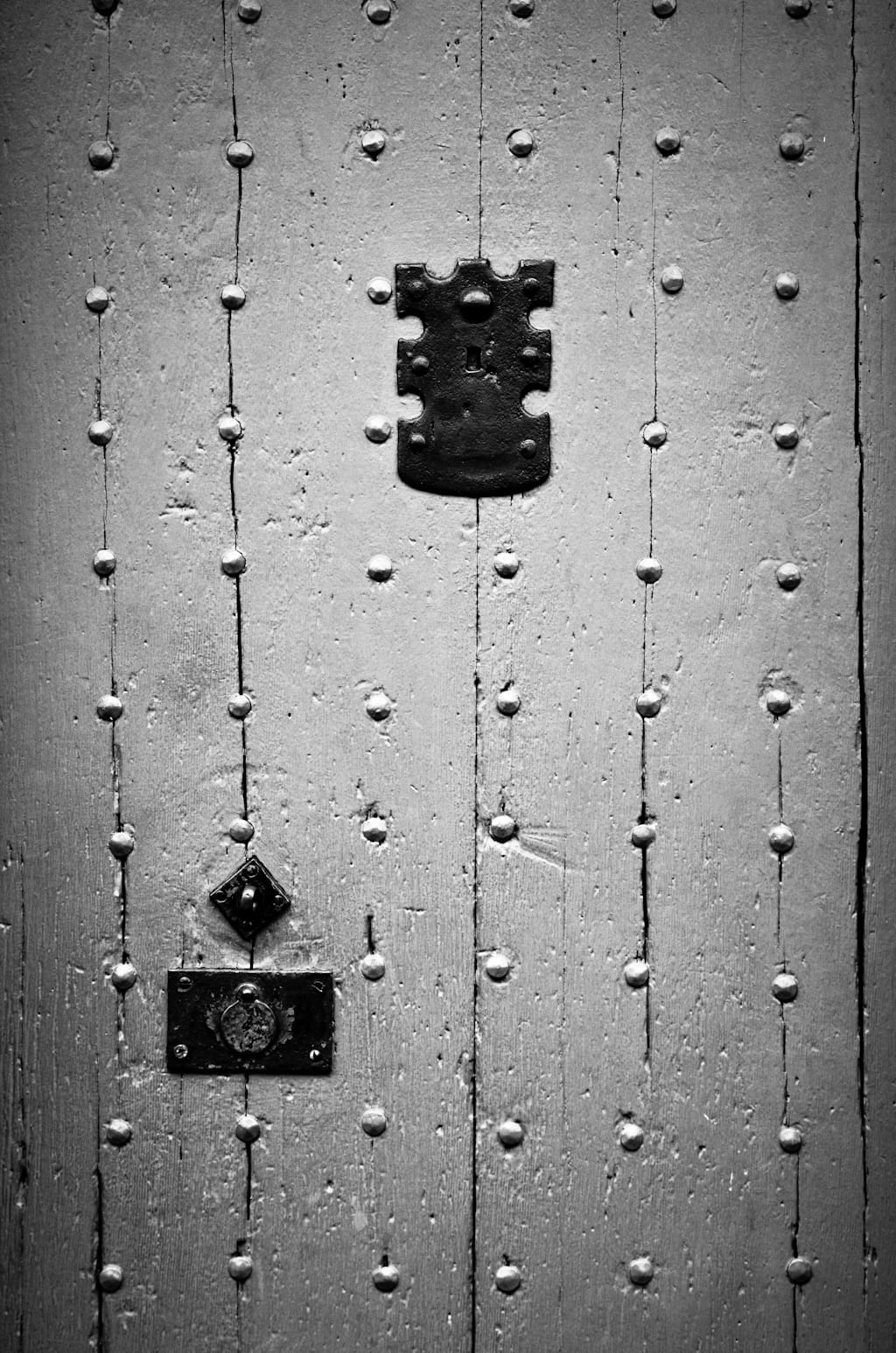
Paul Revere's Door

That’s not just an old door — that’s Paul Revere’s door.  He is by far the most famous resident of the North End, and his house is a popular stop on the Freedom Trail.

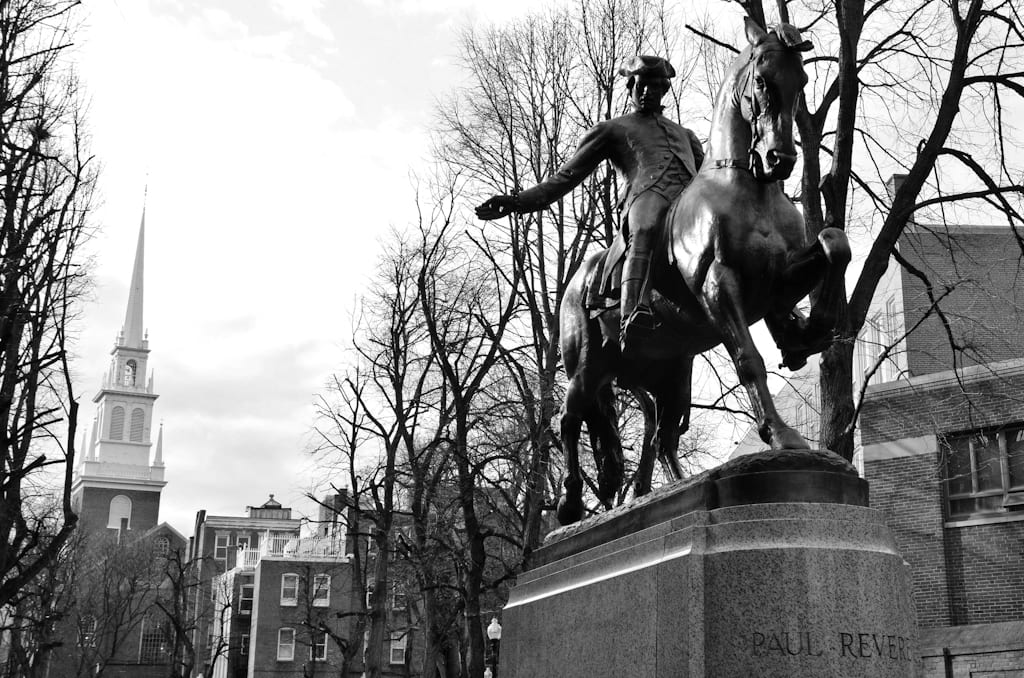
Paul Revere Statue

Here he is commemorated while gesturing in the direction of the Old North Church.  ”One if by land, two if by sea” refers to the lanterns that were lit in the Old North Church — two lanterns signified that the British Army was invading by sea.  I found out recently that they were only lit like that for less than a minute, so not as to arouse the suspicion of the British.

Paul Revere and William Dawes, Revere’s partner and an unsung hero if there ever was one, rode to every Middlesex village and farm warning the colonists to prepare as a militia.

North End Goodies

After strolling around and taking in the history, pick up some Italian goodies at one of the many shops in town.  This was taken at Modern Pastry, the place with the absolute best cannolis in Boston.  (Do NOT go to rival Mike’s Pastry diagonally across the street.  Modern is so much better!)

And that’s my new camera!  I’m really looking forward to taking it around the world.

Which North End picture is your favorite?

My account of the Attack on the Boston Marathon

Yesterday I went to watch the Boston Marathon.  A few hours later, we were recovering from a devastating attack on our city.
My friends, family, and I are fortunate to be uninjured.  We were watching two miles away from the blasts in Copley Square.
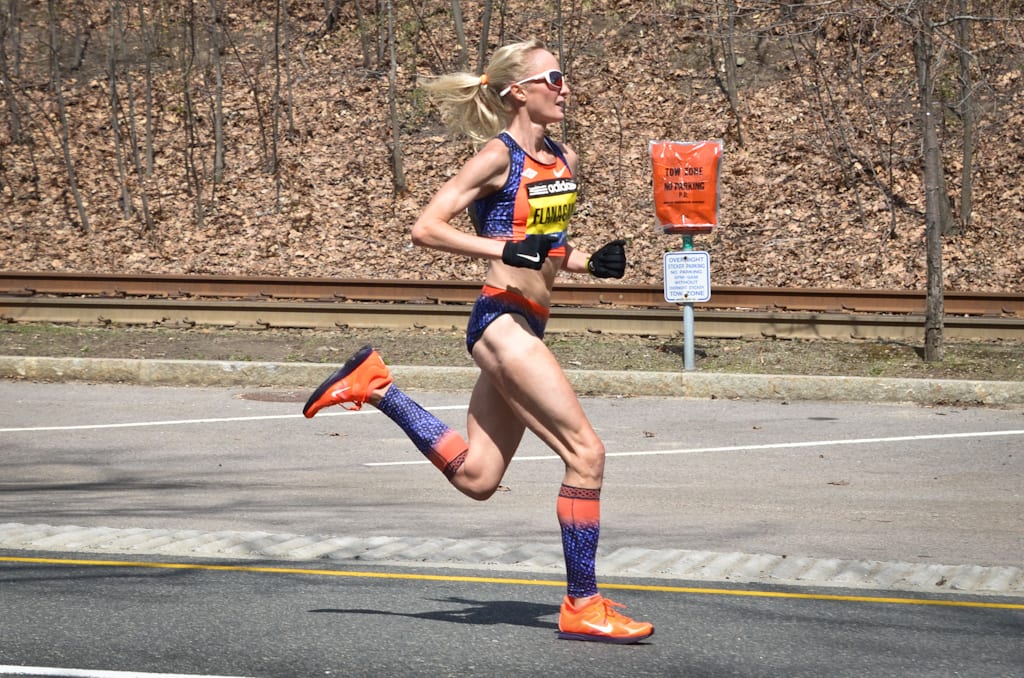
Marathon Runner from Marblehead

Boston: Home to the World’s Best Marathon

Boston is a lot of things — an intellectual hub, a technological hotspot, a historical treasure trove.  We’re fiery, we’re smart, we’re independent, and we celebrate Patriots’ Day — a Massachusetts-only holiday that celebrates the occasion when the British were driven out of Boston during the American Revolution.
Boston is also a sports town.  Oh, are we ever a sports town!  Even for someone like me who isn’t a sports fan, sports are the lifeblood that bond Bostonians, and we have some great teams (all of which won championships in the past decade).  The Red Sox will beat Baltimore and a “Yankees Suck” chant will materialize on Yawkey way, itself a bonding ritual more than an insult.  Hell, the Celtics can beat the Lakers and we’ll be doing the same thing.
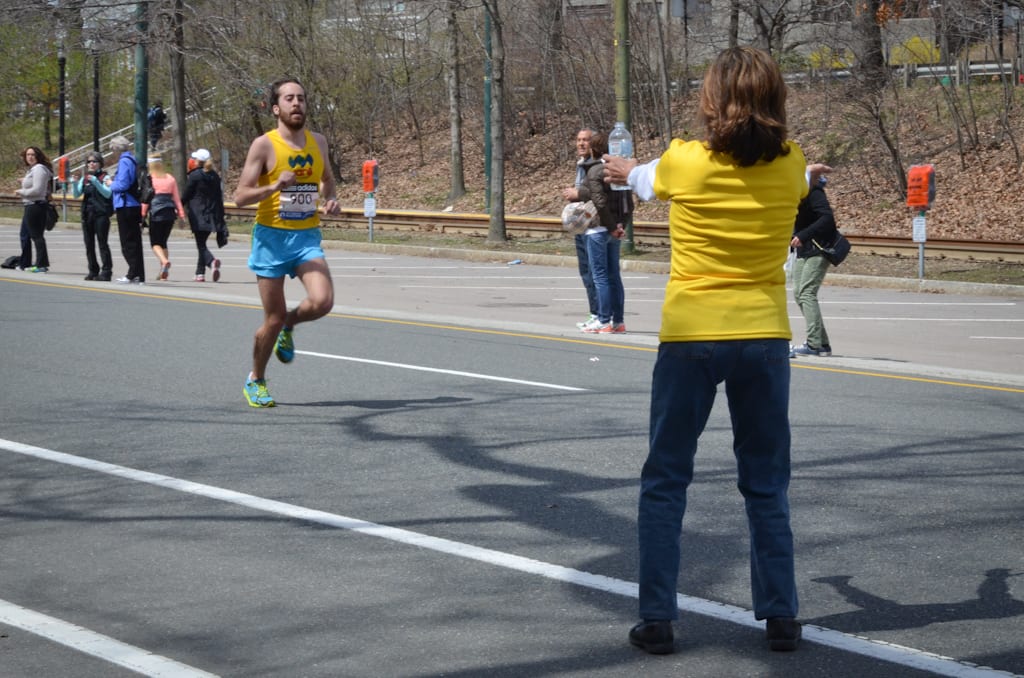
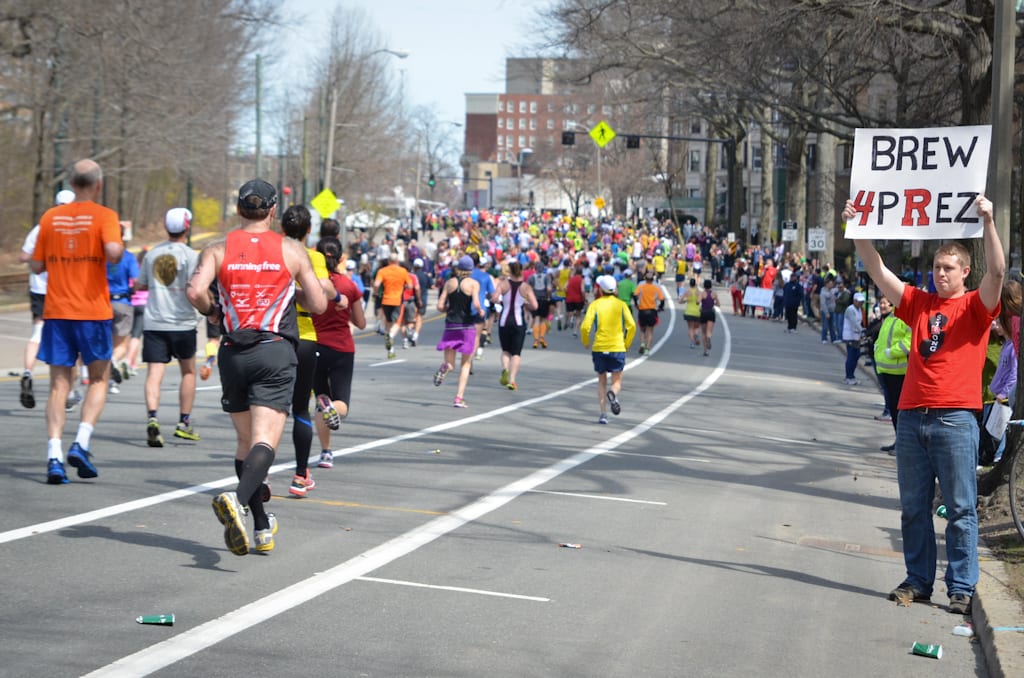
But the Boston Marathon is different from other Boston sports.  It’s inherently joyful.  It’s not competitive — well, aside from briefly wondering if this will be the year that an American will finally beat the Kenyans and Ethiopians.  No matter who leads the path on the 26.2-mile jaunt from Hopkinton to Copley Square, we cheer for them like crazy, and we keep cheering for the runners that cross our path over the next several hours.
Helping Marathoners
I never got Patriots’ Day off when I worked in Boston, but I’d always take it off anyway, going down to the finish line to watch the runners and take in the atmosphere.  When it came time for me and Mario to plan our visit home, I suggested we time it around Marathon Monday.  My friend Beth and her boyfriend Brian invited us to skip Copley Square and watch by their place in Brookline instead.
We cheered on the runners on Beacon St., reassuring them that with infamous Heartbreak Hill now in the past, they were in the home stretch of the marathon.  ”You’re almost done!  Keep going!”  we cheered.  ”You can do it!”
“God save the Queen!” Mario called out to several runners decked out with union jack shorts, which often elicited a pumped fist in reply.  ”I love you, Tinkerbell!” I yelled to a man dressed in a green fairy costume with a wand.
Marathon Tinkerbell
Behind us was a group of college students barbecuing on their roof, red solo cups in hand.  The more time that passed, the drunker they got — but they never stopped cheering for the runners.  They yelled out the names people had written across their shirts, along with a raucous “U-S-A!  U-S-A!” whenever a fatigues-clad soldier walked by.
At one point, a runner dressed in green fell to his knees, clearly in pain.
“Come on, green!” yelled the college students.  ”YOU CAN DO IT!  Pick yourself up, green, you’re almost finished!  You’ve got this!  YES, YOU CAN!  YES, YOU CAN!  YES, YOU CAN!”  And before long, the man in green picked himself up and started jogging again, throwing a grateful glance in their direction.
That’s the Boston Marathon.  It’s so positive and uplifting.
So for someone not only to brutally attack innocent people, but to do so in the context of such a joyous occasion, was an unbelievably coldblooded maneuver.
Washington Square Marathon

Shock and Horror

Mario, Beth and I were having lunch at a Thai place on the Mile 23 mark when my dad called me, telling me that there had been an explosion in Copley Square.  My stomach dropped.  The three of us immediately got on our phones and began updating social media and calling our loved ones.
Minutes earlier, a band outside had been playing “Hello, It’s Me” to the crowd as smoke billowed from a barbecue.  The elite runners had long crossed the finish line, but people were still cheering on the runners that passed, offering them water and orange slices.  But as word of the disaster spread, everyone on the sidelines had their phones out.  The music and the barbecue stopped.  The atmosphere turned dark.  Before long, the police started intervening on the route, telling the runners to go home.
We headed back to Beth’s as more details slowly trickled in.  Two people had died (a third died later).  More bombs had been found (this was later found to be false).  A lot of people had lost their legs, and photos surfaced of people with their limbs missing.
Mario, being a journalist, immediately got a call from the BBC asking him to go in and report.  And as much as I didn’t want him to, with us having no idea if there was another bomb just waiting to go off, he went.  That was awful.
Boston Marathon

The Impact

I can’t imagine to think about what the victims and their families are going through right now, especially the family of the eight-year-old boy from Dorchester who lost his life, and the people who are now going forward without their limbs.  My heart goes out to them.
I’m sad for my city, my community, and my former neighborhood, Back Bay, where the blasts went off and where I lived for two years.
I’m humbled by the first responders.  Could you imagine seeing an explosion go off — and having the instinct and strength to run straight into it?  I’ve always respected these people deeply, but after seeing the video of them running directly into the blast, having no idea what lay ahead, my respect and admiration have gone up exponentially.  Thank you SO much for all that you do.
I’m inspired by the Bostonians who immediately stepped up to offer whatever help they could, including offering to house runners without a place to stay.  I’m floored by the marathoners who continued running straight to Mass General, another mile and a half, to donate blood.
In the coming days, more details will unfold about this attack.  But for now, know that my city will get through this.  We Bostonians have a long history of making it through difficult circumstances.  We will survive this and thrive once again.

When Savannah Met Alida in a Vanuatu Village

I don’t know why it has taken me so long to write this post.
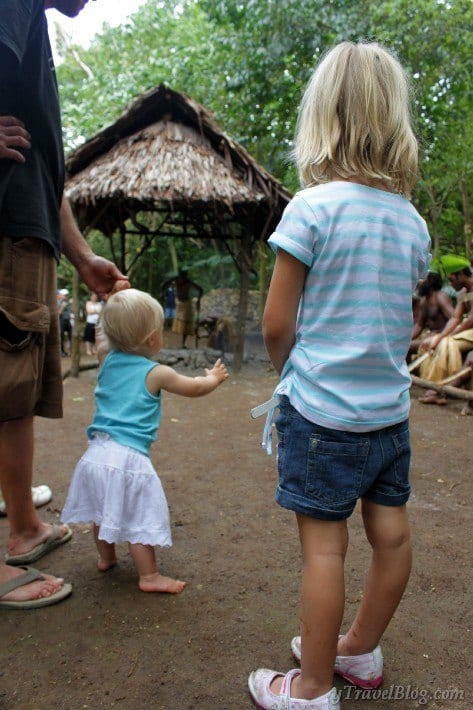
Savannah meeting Alida was one of the most touching moments I have ever experienced travelling and affirmed for me why travel with our children is the right choice for us.
It’s challenging to travel with kids and I worry about possible negative impacts.
This is the voice of mother’s guilt that arrives the minute your wriggling, crying new born is placed in your arms.
It’s a whole lot of love and responsibility packaged into one adorable bundle and sometimes the task feels so overwhelming.
“This moment in Vanuatu made me feel like I was somehow getting motherhood right”
Our friend, Jennifer, asked about the hugely popular photo we shared on our facebook page. I told her of my struggles writing about it.
Larofa cultural village, Vanuatu
“I just don’t feel like I can capture why it was so special.”
“You can. It’s there within you, just let it come out.”
So I’ll try.

Why did I start this travel blog?

Because I have a whole lot of love for the world and its people.
I’ve been so blessed to travel for the majority of my adult life. The greatest gift it has ever given me is to understand that people are all the same. It doesn’t matter where we were born or what we do with our lives, we all just want to be happy and to be loved.
I hate fighting, I hate people hating, I hate wars.
I desperately want the world to be full of peace, love and mung beans. Life is better when we get along and are happy.
I started the blog because I thought I could share the world and show people just how much we all are alike.
I know this concept of peace is crazy and probably never going to happen, but you can never stop hoping.

Larofa Cultural Village, Vanuatu

Larofa cultural village, Vanuatu
Ready for the show
On a sunny Vanuatu morning over a cup of coffee and a biscuit, my ideal world happened through the eyes of our children.
Children don’t see divides, they don’t see hatred, and they don’t see why you are better or less than me.
They just see love and joy and wonder.

Savannah meets Alida

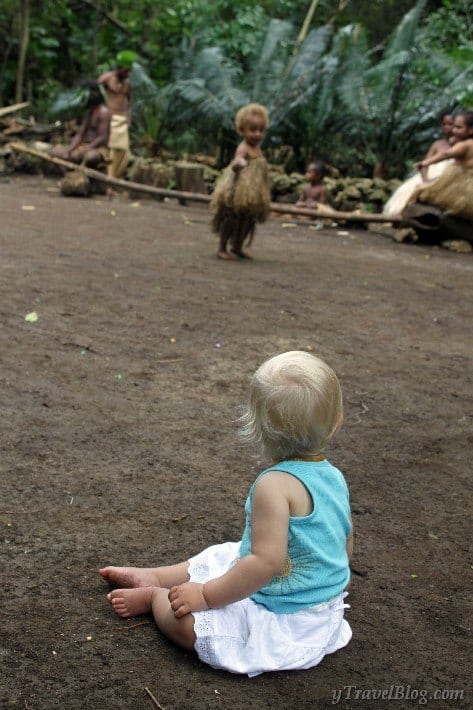
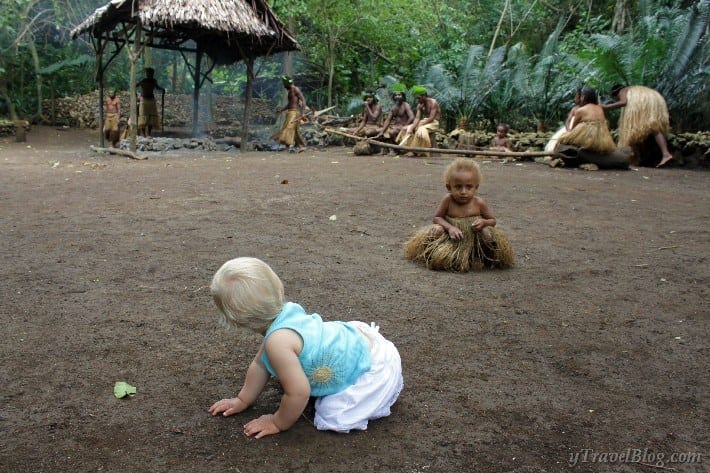
The two girls couldn’t have been more different.
One with curly caramel hair and dark skin wearing a grass skirt.
The other, fair with snowy blonde hair wearing a blue singlet and white skirt.
Two babies enamoured with their differences, yet joined by the commonalities of laughter and wonder.
They eyed each other from afar.
Alidia slowly crept closer to Savannah. Savannah giggled and began crawling away before stopping and turning to stare, beckoning her to come play with a smile.
She jumped up and down and began creeping again, getting closer and then running away. The game continued just as the fire walking started, the main event our cruise tour group had come to see at the traditional Larofa cultural village.
Amongst my joy in watching the two girls interact, I felt sad and guilty because barely anyone was watching the warrior perform the amazing feat of walking over hot coals.
They were watching the two girls.
Like moths to the flame they became transfixed their hearts overflowing with joy because they each recognized what it was.
Pure love and honour for each other.
What we all really want.
They celebrated the differences by pulling hair, stroking faces and holding hands. They jumped up and down and giggled and squealed
They pointed and looked back at their families,
“Hey do you see my cool friend over here?”
Larofa cultural village, Vanuatu

Larofa cultural village, Vanuatu

Local Vanuatu girl

Larofa cultural village, Vanuatu
Local Vanuatu girl

Athens' new-school wine bars

Greece is not known for its wines, but a new crop of wine bars in Athens offers locals and tourists the chance to sample some excellent homegrown varieties

• This blogpost first appeared on the Culinary Backstreets blog
• Know a great place to eat/stay/etc in Athens? Add a comment

Heteroclito, Athens
         
At Heteroclito wine bar in Athens, all of the wines served by the glass are Greek
The economic crisis that has plagued Greece for the past five years has led to changes on the Athenian culinary scene, including the opening of three new types of venues that seem to be reflective of the times. The first two – cupcake places and frozen yogurt shops – are imports from abroad, perhaps indicative of a population in need of something sweet, comforting and affordable. On the other hand, the third trend, wine bars, digs deep into Greece's roots, representing a fascinating phenomenon in a country that is one of the world's oldest wine-producing regions.
In antiquity, Greek wine was exported across the Mediterranean, and the winemaking tradition has remained strong through the millennia. Yet although there are numerous wineries around the country, in the modern era Greek wine has never achieved the place it deserves on the international market. Production levels are low and vintners have long been unsure of how to market abroad. Outside Greece, one might at best find retsina, a sweet wine infused with pine resin that's reminiscent of the wine used at Communion, or mavrodafni, a red varietal with an almost industrial flavour. But with Greeks themselves increasingly consuming wine, these days a new crop of wine bars has opened in Athens that give both locals and visitors the chance to taste some great domestic varieties.
Oinoscent (which we previously mentioned in our Athens Best Bites of 2012) was the first wine bar downtown when it opened a few years ago and is still very popular with young professionals. The atmosphere – which, unlike most bars in Athens, is strictly nonsmoking – is smart yet casual, with aluminium chairs and warm decor. (Don't forget to check out the über-sleek wine cellar downstairs.) Oinoscent's owners, two lovely brothers in their late twenties, are happy to offer informed advice in English about what to choose from the wine list. The snacks are also excellent: in addition to the barley rusks (think big, fat rustic croutons soaking in olive oil) and olives and the truly fantastic cheese platter, there is an excellent mozzarella di bufala with baby tomatoes.
The short, carefully selected wine list at Oinoscent is balanced between domestic and foreign wines, but the real adventure lies on the list's Greek side. We particularly like the Mikri Kivotos, a blend of agiorgitiko grapes from the Nemea region of the Peloponnese and xinomavro grapes from Amyntaio in northern Greece. Often characterised as Greece's merlot, xinomavro is one of the most promising Greek varieties, at once dark (mavro means black), dry and rich in flavor. If you are aiming for white, another interesting option is Magiko Vouno ("Magic Mountain"), made by Lazaridi Winery in Drama in Northern Greece. This is a popular sauvignon blanc in Greece and is an elegant, exuberant wine with fruity notes.
Oinoscent wine bar, Athens Oinoscent wine bar. Photograph: Manteau Stam Located just off Ermou, Athens' biggest commercial street, Heteroclito (which means "heterogenous") opened its doors in late summer 2012. The place is our favourite in terms of decor: the downstairs area is like a nonsmoking French bistro, while the smoking area upstairs is an ode to 60s and 70s Athens, with mosaic floors and Danish furniture. The emphasis here is on Greek wine and Greek grape varieties, something that the owners, Madeleine and Chrysoula, are always keen to point out. Indeed, all of the wines served by the glass are Greek.
We loved the malagousia – one of Greece's best-known aromatic varieties, grown in both the Peloponnese and northern Greece – from Arvanitidis Winery outside Thessaloniki. This delicate, aromatic white grape had become virtually extinct by the 1980s, when Gerovassiliou Winery resuscitated it and turned it into a leading Greek wine, especially in the foreign market. Greece's dessert wine tradition is also worthy of note. Some of the country's best dessert wines are produced by a co-operative on the island of Samos. The award-winning Samos Nectar, which has a rich, sweet taste with an almost raisin-like aftertaste, is considered one of the best in its category – and, at €4 per glass, it's also a great deal.
There are two even newer entries to the roster of downtown Athens wine bars. By the Glass took over one of the Syntagma area's most beautiful arcades, opposite the city's Russian Orthodox church, to open a clean (no smoking allowed) bar with an interesting twist. Customers can pick and choose what they want to try and in what quantity, with glasses offered in 25ml, 75ml and 150ml. There are about 90 labels available, of which 19 are offered by the glass, making the venue a great place to taste different varieties. By the Glass attracts a somewhat older and more mature clientele.
Also brand-new, Harvest is located at one of our favourite street corners, where the pedestrianised Aiolou meets Evripidou, a traditional downtown trade street famous for its spices and pastirma shops. Run by the young and enthusiastic Evangelia Kontopoulou, Harvest is a place we have grown to love. The decor – funky ceramic tiles on the walls, large communal tables – is gorgeous. Thanks to both the menu and the wine list, Harvest attracts a mixed crowd, from young couples and singles to folks in their sixties. The food selection is reason enough to come here, though the tapas are on the pricy side. In our opinion, the best value-for-money items are the tostas, open grilled sandwiches served with salad on the side, of which our favourite is the one with jamón (Spanish ham) and tomato. We're also fond of the (very Spanish) fabada, a delicious mixture of white baby beans and chorizo in red sauce.
We imagine that in a few years from now, Athens will most likely have far fewer cupcake bakeries and frozen yogurt stands. This new crop of wine bars, on the other hand, seems like it's here to stay. We'll drink to that.
Note: Opening and closing times are to be taken with a grain of salt, as Athens bars close when people go home.
• Oinoscent: Voulis 45-47, Syntagma, +30 210 322 9374, Mon-Thurs noon-1am, Fri-Sat noon-2am, closed Sunday
• Heteroclito: Fokionos 2, Syntagma, +30 210 323 9406, heteroclito.gr, Mon-Thurs noon-midnight, Fri-Sat 12.30pm-1.30am, Sun 5pm-11pm
• By the Glass: Georgiou Souri 3, Syntagma, +30 210 323 2560, Mon-Thurs 8pm-late, Sat 10pm-late, Sun 11pm-late (closing time depends on business)

Holiday planning advice: Ask Tom – live Q&A

Got a travel dilemma? Tom Hall of Lonely Planet was online on Wednesday to answer your queries. Readers also gave some excellent tips too. Read them – and Tom's answers – in the comments below              

Algarve. Portugal
 
         
The Algarve, Portugal. Photograph: Alamy
The weather appears to have turned a corner in the UK and suddenly summer does not feel quite so far away. If you need help planning ahead for your holiday, or a last-minute spring weekender, Tom Hall is back to help brainstorm destination suggestions, offer practical advice on getting there and give you plenty of tips on how to spend your time once you've checked in.
Tom will be online at 1pm BST on Wednesday 17 April, replying to your questions on any queries you have about travel this summer or any time of year. Please post your comment below.
Tom will get to as many questions as he can in an hour, but due to the volume of questions, he may not be able to answer all of them in the live blog. Unanswered questions will be considered for future Ask Tom blog posts.